















How Breathwork Can Transform Your Intimate Experiences

This content is for informational purposes only and does not constitute medical advice. Consult a healthcare professional for personal guidance.
Key Takeaways
- Controlled breathing activates the parasympathetic nervous system, reducing performance anxiety and increasing sensation
- Breath awareness during intimacy helps you stay present rather than drifting into self-critical thought loops
- Specific techniques like diaphragmatic breathing and synchronised partner breathing can deepen connection
- Breathwork is not a spiritual requirement -- it is a practical, evidence-backed tool anyone can use
- Even five minutes of breath practice before intimacy can shift your entire experience
Here is something that might surprise you: the single most effective thing you can do to improve your intimate experiences has nothing to do with technique, positions, or products. It is learning how to breathe.
That sounds almost laughably simple. You already breathe, obviously. But there is a profound difference between the shallow, unconscious breathing most of us default to -- especially during moments of vulnerability or arousal -- and the deliberate, deep breathing that activates your body's relaxation response. That difference can transform how you experience pleasure, connection, and presence with a partner or on your own.
Breathwork has been central to Indian wellness traditions for millennia. Pranayama, the yogic science of breath control, has long recognised what modern neuroscience is now confirming: that how you breathe directly influences your nervous system, your emotional state, and your capacity for sensation. This is not about turning intimacy into a yoga class. It is about using one of the most accessible tools your body already has to unlock experiences you might not have known were possible.
The Science: Why Breathing Matters for Intimacy
Your autonomic nervous system has two primary modes. The sympathetic nervous system is your accelerator -- it drives the fight-or-flight response, increases heart rate, tenses muscles, and narrows your focus. The parasympathetic nervous system is your brake -- it promotes relaxation, deepens sensation, and allows your body to fully experience pleasure.
Here is the problem: most people approach intimacy in a mildly sympathetic-dominant state. Performance anxiety, body image concerns, the mental load of daily life, even the simple nervousness of being physically vulnerable -- all of these activate the stress response. And when your sympathetic nervous system is running the show, several things happen that directly undermine intimate experience.
Blood flow to the extremities decreases (your body is preparing to fight or flee, not to feel). Muscle tension increases, which can make touch feel less pleasurable and even uncomfortable. Your attention narrows and becomes hypervigilant, often fixating on self-critical thoughts rather than present sensations. For people with vulvas, this can reduce natural lubrication and clitoral engorgement. For people with penises, it can contribute to erectile difficulties or premature response.
Slow, deep breathing flips this switch. Diaphragmatic breathing -- where the belly expands on the inhale rather than the chest -- stimulates the vagus nerve, which is the main highway of the parasympathetic nervous system. Within just a few deliberate breaths, your heart rate begins to slow, muscles relax, blood flow to the pelvic region increases, and your brain shifts from threat-scanning mode to pleasure-receptive mode.
Technique 1: The Pre-Intimacy Reset (5 Minutes)
This technique is designed for the transition between your day and your intimate time. It works whether you are with a partner or alone. The goal is to shift your nervous system from whatever state your day left it in -- probably some combination of stressed, distracted, and overstimulated -- to a state of relaxed alertness.
Find a comfortable position
Sit or lie down. Close your eyes if that feels comfortable. Place one hand on your chest and one on your belly. This is not about creating a ritual -- it is simply about giving your nervous system a clear signal that you are shifting modes.
Breathe into your belly
Inhale through your nose for a count of four, directing the breath into your lower abdomen. The hand on your belly should rise; the hand on your chest should stay relatively still. This activates the diaphragm and triggers the parasympathetic response.
Extend the exhale
Exhale slowly through your mouth for a count of six to eight. The exhale is where the magic happens -- a longer exhale than inhale further activates the vagus nerve and deepens relaxation. You might notice tension releasing from your jaw, shoulders, or pelvic floor.
Repeat for ten to fifteen cycles
Continue this pattern for about five minutes. With each breath, allow your attention to settle more fully into your body. Notice the weight of your body against the surface beneath you. Feel the temperature of the air. Let thoughts about your to-do list pass without following them.
Technique 2: Synchronised Partner Breathing
Breathing together is one of the most intimate things you can do with another person. It requires no physical contact, no vulnerability beyond simply being present, and it creates a felt sense of connection that goes beyond words. It is particularly powerful for couples who feel disconnected or stuck in a routine.
Sit facing your partner, close enough that you can feel each other's breath. You can hold hands or place a hand on each other's heart, but physical contact is optional. Begin breathing in rhythm: inhale together, exhale together. Do not worry about perfect synchronisation at first -- let your breathing naturally find a shared rhythm.
Maintain eye contact if comfortable. This combination -- shared breath, shared gaze -- activates the mirror neuron system and promotes the release of oxytocin. Many couples report feeling a deep sense of emotional closeness after just five minutes of this practice, even when they have been feeling distant.
You can use this as a precursor to intimacy, or simply as a daily connection practice. It works equally well as a way to reconnect after conflict, to ease the transition from parenting-mode to partner-mode, or to build anticipation before a planned evening together.
Technique 3: Breath Awareness During Intimacy
This is where breathwork moves from preparation to practice. During intimate moments, most people either hold their breath unconsciously (which increases sympathetic activation and reduces sensation) or breathe shallowly (which keeps the body in a mild stress state). Simply becoming aware of your breathing during intimacy can shift the experience dramatically.
The practice is simple: as sensations build, consciously slow and deepen your breathing rather than letting it become rapid and shallow. Breathe into your pelvis, imagining the breath expanding the entire lower body. This increases blood flow to the region, enhances lubrication and engorgement, and allows sensations to build more fully rather than peaking prematurely.
For people who experience difficulty reaching climax, breath can be a powerful tool. Often, the body is close to orgasm but the mind is too active -- analysing, worrying, trying too hard. Deep breathing quiets the analytical mind and allows the body's natural arousal cycle to complete. Conversely, for those who experience arousal too quickly, slowing the breath can help regulate the build-up and extend the experience.
Technique 4: The Body Scan Breath
This technique combines breath with body awareness and is particularly useful for anyone who tends to disconnect from their body during intimacy -- a surprisingly common experience, especially for those carrying body image concerns or past trauma.
Before or during intimate time, take a few minutes to breathe into different parts of your body sequentially. Start with your feet and work upward: breathe into your calves, your thighs, your pelvis, your belly, your chest, your hands. At each point, notice what you feel without judgement. Is there tension? Warmth? Numbness? Pleasure? Simply observe and breathe.
This practice essentially rewires your attention from the outside in. Instead of wondering how you look, you start noticing how you feel. Instead of performing, you start experiencing. Over time, this builds what somatic therapists call interoceptive awareness -- the ability to sense your body's internal signals -- which is directly linked to both pleasure capacity and emotional regulation.
Breathwork for Common Intimate Challenges
For Performance Anxiety
Performance anxiety is fundamentally a sympathetic nervous system overactivation. The pre-intimacy reset technique is specifically designed for this. Practice it consistently -- not just when you are anxious, but as a regular transition ritual. Over time, your nervous system learns to shift gears more quickly and easily.
For Difficulty With Arousal
Slow, deep belly breathing with an emphasis on directing breath toward the pelvis can increase blood flow and sensation in the pelvic region. Combine this with the body scan technique to rebuild awareness of sensation. Adding a quality lubricant like MyMuse Glow Relaxing massage oil (Rs 599) can complement breathwork by engaging the sense of touch alongside breath awareness.
For Disconnection During Intimacy
If you tend to drift into your head during intimate moments, the synchronised partner breathing technique can anchor you in the present moment. You can also try a simple cue: every time you notice your mind wandering, take one deep, conscious breath and redirect attention to the point of physical contact between your body and your partner's.
For Difficulty Reaching Orgasm
Many people unconsciously hold their breath as arousal builds, which paradoxically inhibits the relaxation needed for climax. Practice breathing through the build-up rather than bracing against it. Let the breath be audible. Relax your jaw and pelvic floor muscles on the exhale. These small shifts can make a significant difference.
Building a Practice: Starting Small
Breathwork does not require thirty-minute sessions or a meditation cushion. Start with two minutes of diaphragmatic breathing before bed. Practice the belly-breath technique while waiting for your morning chai to brew. Use synchronised breathing with your partner during a quiet moment on the weekend.
The key is consistency rather than intensity. Your nervous system responds to patterns. The more frequently you practise shifting from sympathetic to parasympathetic mode through breath, the more easily and quickly that shift happens -- including in intimate moments where you need it most.
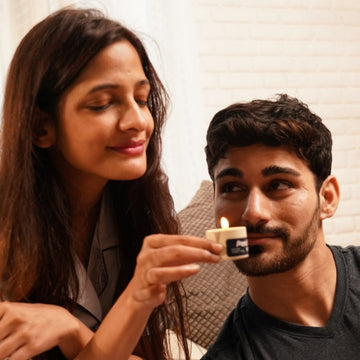
Some people find that combining breathwork with a sensory anchor deepens the practice. This might mean lighting a particular candle, using a specific massage oil, or playing familiar music. Over time, these sensory cues become associated with the relaxation response and can help you drop into a receptive state more quickly. A product like MyMuse Melt massage candle (Rs 799) serves this dual purpose -- setting a mood while providing a warm, skin-safe oil for touch-based connection.
Breathwork For Better Intimacy: Your Questions Answered
Do I need experience with meditation or yoga to try breathwork for intimacy?
Not at all. The techniques described here are simple, practical, and do not require any prior experience. If you can breathe slowly and deliberately for a few minutes, you can do this. There is no spiritual or philosophical framework required -- this is applied physiology.
Will my partner think it is strange if I suggest breathing together?
Frame it as an experiment rather than a prescription. You might say something like "I read about this breathing technique that is supposed to feel really connecting -- want to try it for two minutes?" Most partners are open to trying something low-stakes that promises more closeness. If synchronised breathing feels too structured, simply start by being more aware of your own breath during intimate moments.
How long before I notice a difference in my intimate experiences?
Many people notice a shift in their very first session, particularly a reduction in mental chatter and an increase in physical sensation. The deeper benefits -- greater arousal, easier orgasm, more emotional connection -- typically build over several weeks of consistent practice. Think of it like exercise: a single session helps, but regular practice transforms.
Can breathwork help with pain during intimacy?
Breathwork can reduce pain that stems from muscle tension, particularly tension in the pelvic floor. Deep breathing relaxes the pelvic muscles, which is one reason it is recommended by pelvic floor physiotherapists. However, persistent pain during intimacy should always be evaluated by a healthcare professional, as it may indicate conditions that require specific treatment.
Is breathwork a replacement for addressing underlying issues like anxiety or trauma?
No. Breathwork is a valuable complementary tool, but it is not a substitute for professional support when needed. If you experience significant anxiety, trauma responses, or persistent difficulties with intimacy, working with a qualified therapist alongside breath practices will be more effective than breath alone.
- Evidence-Based Techniques
- Reviewed by Wellness Professionals
- Discreet Packaging on All Orders
- Trusted by 3.75L+ Customers
Designed for Real Bodies
Breathwork pairs beautifully with sensory products designed for relaxation and connection. Explore MyMuse's collection of massage oils and candles for a multi-sensory experience.
Browse ProductsLast updated: April 2026