













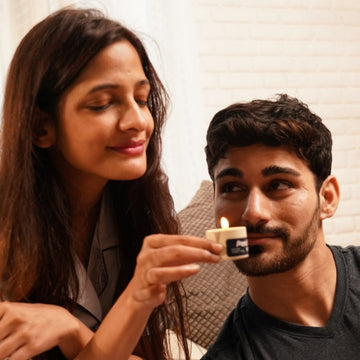




What Is Edging? The Complete Guide to Delayed Gratification

This content is for informational purposes only and does not constitute medical advice. Consult a healthcare professional for personal guidance.
Key Takeaways
- Edging is the practice of approaching orgasm and deliberately pausing before climax — multiple times
- When orgasm finally occurs after edging, it is often significantly more intense due to accumulated arousal
- Edging builds body awareness and can help people who experience premature ejaculation develop better control
- It works for all genders and can be practised solo or with a partner
- There are no health risks — edging is simply a different approach to pleasure, not a dangerous practice
Edging — also called orgasm control, peaking, or the stop-start technique — is exactly what it sounds like: riding the edge of orgasm without going over. You build arousal to the brink, pause, let the intensity subside, build again, pause again, and repeat until you choose to finally let go. When you do, the resulting orgasm is often dramatically more intense than if you had simply proceeded without interruption.
The practice has ancient roots (tantric traditions have incorporated orgasm delay for thousands of years) but has gained mainstream attention as more people discover that pleasure is not just about the destination — it is about how long and how deliberately you choose to travel.
How It Works (The Science)
During sexual arousal, the body progresses through stages: excitement, plateau, orgasm, and resolution. Edging manipulates the plateau phase — the high-arousal state that precedes orgasm — by extending it artificially through deliberate pauses.
Each time you approach orgasm and pause, several things happen physiologically:
- Dopamine accumulates. The neurotransmitter associated with anticipation and reward builds with each cycle of approach-and-retreat.
- Blood flow increases. Genital engorgement progressively increases with each arousal cycle, heightening sensitivity.
- Muscle tension builds. The pelvic floor muscles, which contract during orgasm, accumulate tension with each edging cycle. When they finally release, the contraction is stronger.
- Psychological anticipation compounds. The brain's reward system responds more intensely to delayed gratification than immediate gratification. This is the same principle that makes a meal taste better when you are genuinely hungry.
How to Edge (Solo)
- Stimulate yourself toward orgasm. Use whatever method works for you — manual, a personal massager like MyMuse Pulse (Rs 2,499), or any other preferred method.
- Rate your arousal on a 1-10 scale. 1 is no arousal. 10 is orgasm. You are aiming to reach 8-9 and then pause.
- Stop all stimulation at 8-9. Remove your hand, turn off the massager, or simply freeze. Breathe. Let the urgency subside — this typically takes 15-60 seconds.
- When arousal drops to 5-6, begin again. Build back to 8-9 and pause again.
- Repeat 3-5 times (or as many as you enjoy).
- When you are ready, allow the orgasm. Most people report that the final orgasm after edging is notably more intense — longer contractions, more full-body sensation, and a deeper sense of release.
How to Edge with a Partner
Partner edging requires communication — you need to tell your partner when you are approaching the edge so they can adjust their stimulation. This communication itself adds a layer of intimacy and vulnerability.
- Use a simple signal. A word ("pause"), a tap on the arm, or simply holding their hand still. Pre-agree on the signal so there is no ambiguity.
- Take turns. Edge one partner, then the other. The partner who is waiting becomes increasingly aroused through anticipation and the power dynamic of controlling someone else's pleasure.
- Combine with other stimulation during pauses. When you stop genital stimulation during an edge, switch to kissing, massage, or verbal intimacy. This keeps connection alive during the pause without pushing toward orgasm.
Common Questions and Concerns
Is Edging Unhealthy?
No. There are no documented health risks associated with edging. The arousal cycle is a normal physiological process, and pausing before orgasm does not damage tissue, disrupt hormones, or cause any medical concern. If you feel frustrated during the practice, that is psychological — and temporary.
"Blue Balls" — Is It Real?
Vasocongestion — the sensation of heaviness or aching in the genitals after prolonged arousal without orgasm — is a real physiological phenomenon. It occurs because blood has pooled in the genital area and not been released through orgasm. It is uncomfortable but not dangerous, and it resolves on its own within minutes to hours. It is not a medical emergency and is not a valid reason to pressure a partner.
Common Questions About Edging Complete Guide
How long should an edging session last?
There is no set duration. Beginners might edge for 15-20 minutes total. Experienced practitioners may extend sessions to an hour or more. The point is not endurance — it is presence. Edge for as long as it feels good and stop when you want to.
Does edging work for women?
Absolutely. Edging is effective regardless of gender. Women who practice edging report more intense orgasms, greater body awareness, and improved ability to communicate their arousal levels to partners. The principle is identical: building arousal, pausing, and allowing the accumulated tension to produce a more powerful release.
What if I accidentally orgasm during edging?
Then you had an orgasm, which is not exactly a failure state. Edging is a practice, not a performance. Misjudging the edge is completely normal, especially when you are learning your body's signals. Over time, you will become better at recognising the "point of no return" and pausing before you reach it.
Can edging help with premature ejaculation?
Yes. The stop-start technique (which is essentially edging) is one of the most commonly recommended behavioural therapies for premature ejaculation. By repeatedly approaching and retreating from orgasm, you train the nervous system to tolerate higher levels of arousal without reflexively ejaculating. Clinical evidence supports its effectiveness, particularly when practised regularly over several weeks.
Is edging the same as tantric sex?
There is overlap. Tantric traditions include orgasm delay as one element of a broader practice that also encompasses breath work, energy awareness, and spiritual connection. Edging is a more secular, technique-focused version of the orgasm control element. You can practise edging without any spiritual framework, or you can incorporate it into a tantric practice — both approaches are valid.
- Medically Reviewed Content
- Evidence-Based Information
- Trusted by 3.75L+ Readers
- Expert-Backed Guidance
Explore Intimate Wellness
Explore MyMuse's collection of personal massagers and intimate wellness products — designed for people who take their time.
See What FitsLast updated: April 2026