















How Stress Quietly Kills Your Libido (And 5 Ways to Get It Back)

This content is for informational purposes only and does not constitute medical advice. Consult a healthcare professional for personal guidance.
Key Takeaways
- Chronic stress elevates cortisol, which directly suppresses testosterone and oestrogen — the hormones that drive desire
- The brain under stress prioritises survival over reproduction — desire is literally deprioritised at the neurological level
- Indian-specific stressors (joint family dynamics, work culture, financial pressure) create a unique stress-libido landscape
- Exercise, sleep, and stress management practices can measurably restore hormonal balance and desire
- Low libido from stress is reversible — it is a symptom, not a permanent state
You are lying in bed next to your partner and your body is doing the opposite of what you want it to do. Your brain is cycling through tomorrow's deadlines, the unresolved argument with your mother-in-law, the EMI payment due on the 5th, and the email you forgot to send before leaving work. Your partner reaches for you, and your body — which should be responding to the warmth of another human — instead tenses with the residual cortisol of a day that never quite ended.
This is not a personal failure. It is not a relationship problem. It is a biological reality: chronic stress and sexual desire are physiologically opposed. They run on competing neurochemical systems, and when stress wins (which it does, for millions of people, most of the time), desire is the first casualty.
The Biological Mechanism
Cortisol vs. Sex Hormones
Cortisol and sex hormones (testosterone and oestrogen) are both synthesised from the same precursor molecule: pregnenolone. Under chronic stress, the body diverts pregnenolone toward cortisol production — a process informally called the "pregnenolone steal." The more cortisol your body needs, the less raw material remains for producing the hormones that drive desire.
This is not a malfunction. It is a survival priority. Your body has correctly determined that the sabre-toothed tiger (or the modern equivalent: your inbox, your EMIs, your family obligations) is a more immediate threat than reproduction. It responds accordingly by suppressing reproductive function — including desire — in favour of stress management.
The Brain Under Stress
The amygdala (the brain's threat detection centre) is hyperactive during chronic stress, and it suppresses activity in brain regions associated with pleasure, reward, and desire. Simultaneously, the prefrontal cortex (which manages planning and worry) is overactive, consuming cognitive resources that would otherwise be available for processing sensory pleasure.
In practical terms: when you are stressed, your brain is too busy scanning for threats and planning solutions to register your partner's touch as arousing. The signals are reaching your brain — but they are being drowned out by the noise of stress.
Indian-Specific Stressors
While stress affects libido universally, India has specific stressors that compound the issue:
- Joint family living: The lack of privacy, the constant presence of family members, and the relational management required in multigenerational households create a baseline stress level that many couples absorb without recognising.
- Work culture: Long hours, commute times, and the always-on expectations of Indian workplaces leave little energy for connection. The phenomenon of coming home mentally drained but physically present is nearly universal.
- Financial pressure: EMIs, education costs, wedding expenses, and the cultural expectation of supporting extended family create financial stress that is both chronic and rarely discussed openly between partners.
- Social obligations: The Indian social calendar — festivals, family functions, religious observances — while culturally enriching, also represents a significant energy expenditure that competes with private time.
5 Evidence-Based Ways to Get Your Desire Back
1. Exercise (The Fastest Hormonal Reset)
30 minutes of moderate exercise produces an immediate cortisol-lowering effect and triggers testosterone release in both genders. Research shows that regular exercisers have higher baseline desire levels than sedentary individuals, even when controlling for other stress factors. It does not need to be intense — a brisk walk, yoga, or swimming all produce the effect.
2. Sleep (The Foundation)
Testosterone is produced during sleep, particularly during REM cycles. Chronically insufficient sleep (less than 6 hours) can reduce testosterone levels by up to 15%. Prioritising 7-8 hours of quality sleep is one of the most effective interventions for stress-related low desire. This is not a luxury — it is hormonal medicine.
3. Stress Management Practices
Meditation, deep breathing exercises, and yoga have been shown to lower cortisol levels measurably. Even 10 minutes of guided meditation daily can produce statistically significant cortisol reduction within two weeks. Apps making this accessible are widely available and require no special equipment or training.
4. Scheduled Intimacy (Counterintuitively Effective)
When stress is high, waiting for spontaneous desire is like waiting for motivation to exercise — it may never arrive. Scheduling intimate time (not necessarily sex — just private, uninterrupted time together) ensures that connection does not fall off the calendar entirely. Many couples report that once they begin, the desire follows the action rather than preceding it (responsive desire).
5. Sensory Pleasure as Transition
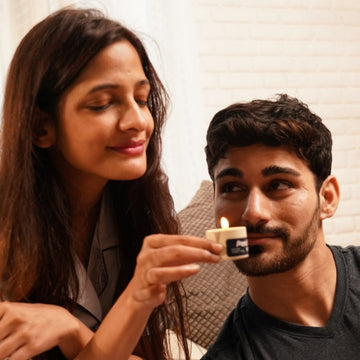
The transition from stressed mode to intimate mode requires bridging the gap between your sympathetic nervous system (fight-or-flight) and your parasympathetic nervous system (rest-and-digest). Sensory experiences provide this bridge: a warm bath, a massage with MyMuse Glow Oil (Rs 599), calming music, or the scent of a MyMuse Melt Candle (Rs 799). These sensory inputs activate the parasympathetic system and create the physiological state from which arousal can emerge.
Common Questions About How Stress Kills Your Libido
Is stress-related low desire permanent?
No. Stress-related low desire is a reversible symptom, not a permanent condition. When stress is managed — through lifestyle changes, stress reduction techniques, or changes to the sources of stress themselves — hormonal balance typically restores and desire returns. It may take weeks to months, but the prognosis is overwhelmingly positive.
How do I know if my low desire is stress-related or something else?
Key indicators of stress-related low desire: it coincides with a period of increased stress, it affects desire across the board (not just with your partner), you used to have higher desire that declined with the stress, and other stress symptoms are present (poor sleep, irritability, fatigue). If desire has always been low or if there are accompanying physical symptoms, a medical evaluation is warranted.
Should I tell my partner that stress is affecting my desire?
Absolutely. Silence around low desire creates misunderstanding — partners often interpret it as rejection or loss of attraction. Explaining that stress is the cause (and that it is not about them) transforms the dynamic from blame to teamwork. "My desire is low because of work stress, not because of anything about you or us" is one of the most relieving sentences a partner can hear.
Can therapy help with stress-related low desire?
Yes. A therapist can help with stress management strategies, address the specific sources of stress in your life, and work with both partners to maintain intimacy during high-stress periods. Couples therapy is particularly effective when low desire has created a cycle of avoidance and resentment.
Are supplements effective for stress-related low libido?
Some adaptogens (ashwagandha, rhodiola) have modest evidence for reducing cortisol and supporting testosterone levels. Ashwagandha in particular has shown positive results in several small studies. However, supplements should complement — not replace — lifestyle interventions. Consult a healthcare provider before starting any supplement, especially if you take other medications.
- Medically Reviewed Content
- Evidence-Based Information
- Trusted by 3.75L+ Readers
- Expert-Backed Guidance
Your Wellness, Your Way
From massage oils to aromatherapy candles, MyMuse makes products that help you transition from stressed to present.
Explore the RangeLast updated: April 2026